

London, November 30, 2025
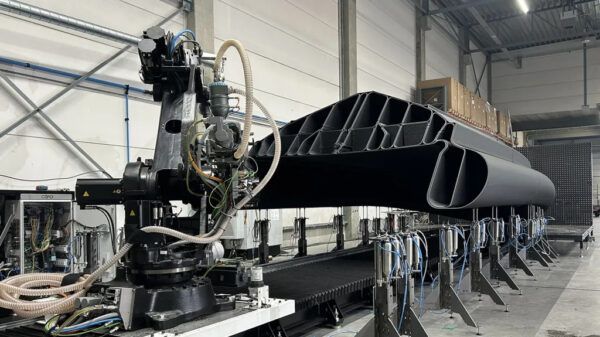
Large-scale 3D printing has emerged as a pivotal innovation in boat manufacturing, revolutionizing production speed, design complexity, and sustainability in maritime industries worldwide. Companies like CEAD are leading this transformation with fully automated hull printing processes using advanced recyclable thermoplastics.
Automation Accelerates Production
Traditional boat hull construction, which typically spans several weeks, faces disruption from automated 3D printing systems. For instance, CEAD has demonstrated the capacity to produce complete boat hulls in 55 to 88 hours with minimal human intervention. This leap forward drastically shortens lead times and reduces labor intensity in a sector historically constrained by manual fabrication methods.
Material Advancements Enhance Durability and Sustainability
The adoption of specialized thermoplastics—such as CEAD®HDPro—ensures that 3D printed boats withstand harsh marine conditions while offering maintenance-free longevity. Notably, these materials are fully recyclable, supporting circular manufacturing processes and addressing environmental concerns associated with traditional boatbuilding.
Design Freedom Enables Complex, Optimized Hull Forms
Large-format additive manufacturing enables fabrication of intricate hull geometries that are challenging or cost-prohibitive through conventional techniques. AI-optimized designs incorporating internal honeycomb or lattice structures yield lighter, stronger vessels with improved hydrodynamics, translating into enhanced speed and fuel efficiency.
Cost Reduction and Manufacturing Flexibility
With significant reductions in tooling and labor costs, 3D printing allows rapid design modifications without disrupting production workflows. This flexibility also paves the way for on-demand manufacturing, including on-site hull repairs or rapid assembly of unmanned drone vessels, offering tactical advantages especially relevant to military and commercial applications.
Environmental Benefits Align with Global Sustainability Objectives
Compared to traditional shipbuilding, 3D printing minimizes waste material and reduces energy consumption. Efficient use of recyclable polymers further advances eco-friendly practices in maritime manufacturing, aligning with broader regulatory and societal pressures to reduce the industry’s environmental footprint.
Maritime Sector Positioned for Broad Adoption
The maritime industry’s complex manufacturing requirements and high labor dependence render it particularly suitable for large-scale 3D printing integration. This technology supports new urban-friendly production facilities, diminishes reliance on skilled manual labor, and could soon expand across workboats, recreational crafts, and unmanned vessels.
As these technological advances mature, 3D printing stands poised to reshape boatbuilding methodologies fundamentally, much as additive manufacturing has transformed aerospace and dental industries, signaling a new era for maritime manufacturing globally.