

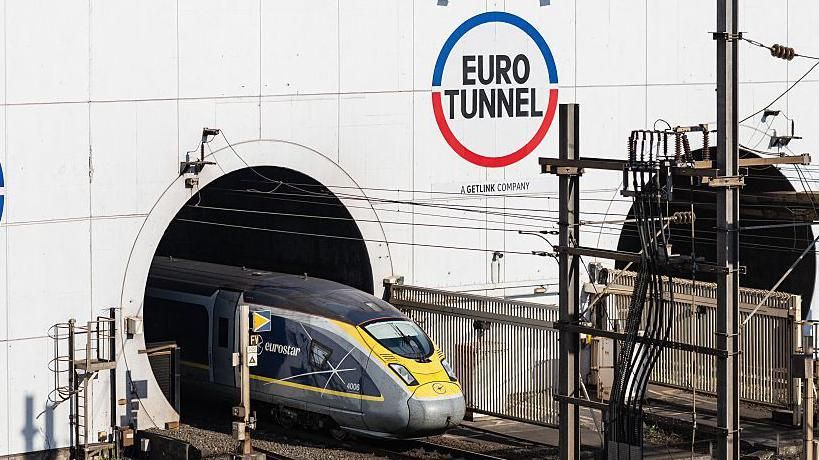
London, November 20, 2025
The UK government has declared further investment in the Channel Tunnel non-viable as of November 2025, halting all related funding amidst ongoing financial losses and operational challenges linked to Brexit and post-pandemic pressures.
UK Government Halts Channel Tunnel Investment
The announcement marks a significant turning point for the Channel Tunnel, the 31.4-mile rail link between the UK and France, which has struggled to deliver expected economic benefits. Authorities cited persistent financial underperformance and mounting costs as key factors behind the decision to withdraw investment support.
Historical Financial Challenges
Originally completed in 1994 at a staggering cost of £4.65 billion—more than double the initial £5.5 billion estimate—the tunnel has never fully recovered financially. When adjusted for inflation, this represents roughly £11.7 billion in 2023 terms. Despite its engineering significance as a major cross-Channel connection, assessments show its economic impact on the British economy has been limited.
Brexit and Pandemic Impacts
The UK’s exit from the European Union in 2016 has introduced significant operational hurdles. As of February 1, 2020, when the UK became an external EU border, increased customs and security protocols slowed traffic flow through the tunnel, complicating logistics and increasing costs. The COVID-19 pandemic further reduced passenger numbers and freight volumes. Unlike other national rail operators, Eurostar and associated operators did not receive UK government bailouts, exacerbating financial strain.
Underutilization of Freight Capacity
Freight transport through the tunnel faces stark underutilization challenges. Current rail freight volumes represent only about 10 percent of the tunnel’s annual capacity, moving roughly one million tonnes of goods compared to a potential demand of 10 million tonnes. Analysts identify monopolistic pricing by dominant UK freight operators, DB Cargo UK and GbRF, as a major barrier, rendering rail freight services economically unviable for most shippers.
Engineering Triumph but Economic Struggles
While the Channel Tunnel remains a landmark engineering achievement, its financial sustainability has been persistently elusive. The combination of cost overruns, Brexit-related border complexities, uncompetitive freight pricing structures, and lack of government financial intervention paints a challenging outlook.
Implications for UK-Europe Transport
The cessation of further investment in this key infrastructure asset raises questions about the future of UK-Europe connectivity. Without renewed capital injections or structural reforms, the tunnel’s role in passenger and freight transport could diminish, potentially shifting trade and travel patterns towards alternative modes like air and sea.
This decision arrives at a critical juncture for the UK’s transport strategy, emphasizing the need for comprehensive policy reviews addressing cross-border infrastructure viability in a post-Brexit context.