

London, November 23, 2025
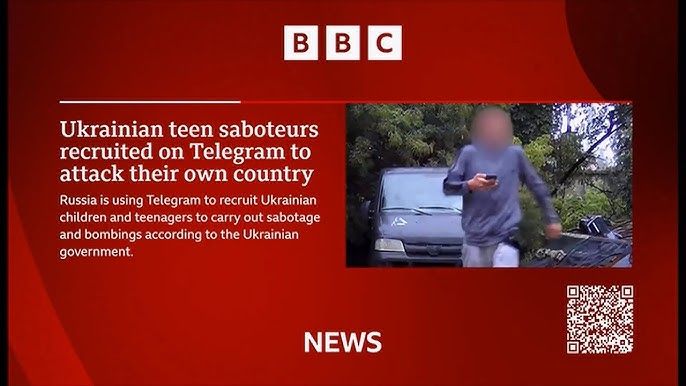
Ukrainian teenagers and children are being recruited by Russian intelligence operatives via Telegram to carry out sabotage and espionage inside Ukraine, in an ongoing effort to destabilize the country through hybrid warfare.
Recruitment and Methods
Russian agents, including the Federal Security Service (FSB), target vulnerable youths through encrypted messaging apps and social media platforms, exploiting financial hardship, displacement, and psychological factors. Teenagers aged 12 to 17 are lured with promises of money, adventure, or a sense of belonging.
Tasks given to these minors include planting bombs near military sites or residences of soldiers, setting fires to military vehicles, railway infrastructure, and electricity transformers, as well as photographing sensitive locations. Some operatives instruct teens to livestream sabotage acts using smartphones for remote detonation.
Payments offered vary from several hundred to thousands of dollars depending on the assignment’s complexity.
Legal Consequences
Despite many victims being manipulated or unaware of the full consequences, Ukrainian authorities have detained over 700 individuals for acts of espionage, arson, and sabotage since spring 2024, with around 25% of those arrested under 18. Minors face prosecution for sabotage, risking up to 10 years in prison.
Recent Cases
Several high-profile incidents illustrate this troubling trend. In July 2025, a 17-year-old traveled 500 miles to collect explosives and a triggering phone hidden in a Rivne park, intending to bomb a military conscription van. He had been promised $2,000.
In Lviv, two boys aged 14 and 15 received instructions to hide a bomb inside a flowerpot near a soldier’s home, with a setup for remote detonation. Meanwhile, a 16-year-old in Dnipro was arrested trying to photograph a military facility after being recruited through Telegram by the FSB.
Broader Context and International Concerns
This manipulation exploits teenagers’ desires for recognition, adventure, and community, often using humor and flattery to gain trust. International bodies such as the United Nations and the Organization for Security and Co-operation in Europe (OSCE) have condemned the recruitment of minors for conflict-related sabotage as potential war crimes and crimes against humanity.
The situation presents complex legal and ethical dilemmas. While minors are prosecuted under Ukrainian law, many are viewed as victims of psychological coercion, prompting debates over justice and rehabilitation.
Implications and Future Measures
This phenomenon represents a new front in hybrid warfare, where digital platforms and social vulnerabilities are weaponized to undermine societal stability from within. It highlights the urgent need for enhanced cybersecurity education targeting youth, proactive mental health support for at-risk children, and robust international cooperation to counter online radicalization.
As the conflict continues, understanding and addressing the exploitation of minors in cyber-enabled sabotage will be critical for protecting national security and upholding international humanitarian law.