

London, November 27, 2025
Supporters of far-right activist Tommy Robinson are increasingly embracing Christianity, merging their political ideology with Christian nationalism across the United Kingdom during 2025. This shift has introduced a religious dimension to a movement traditionally focused on anti-immigration and anti-Islam activism.
Christian nationalism has become a principal framework within Tommy Robinson’s supporter base, which views Britain as a fundamentally Christian nation that has deviated from its core values. At high-profile rallies, religious leaders have affirmed this stance, notably during the Unite the Kingdom march in central London in September, which drew a crowd of approximately 150,000. A religious figure addressed attendees, emphasizing Britain’s Christian identity and the perceived loss of its spiritual path.
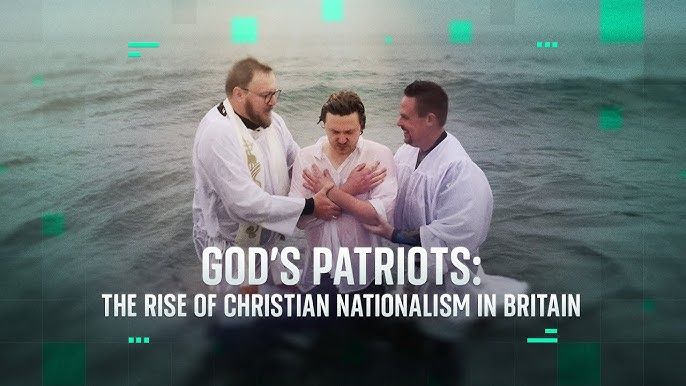
This movement has also seen participants engage in mass baptisms, formally adopting Christianity through religious ceremonies, marking a notable evolution in the group’s ideology. Online communities related to this Christian nationalist trend have accumulated over 50,000 followers, demonstrating significant digital engagement and reach within this political-religious nexus.
Experts researching far-right movements, including Maria Power, have identified these religious conversions as strategic Christian nationalism rather than purely authentic spiritual transformations. This distinction suggests the movement is employing Christianity as a rallying ideology to bolster political objectives rather than solely reflecting genuine faith-based conversions.
The infiltration of Tommy Robinson’s supporters into established Christian communities has posed considerable challenges for churches across the UK. Clergy and religious institutions must now address the politicization of faith, balancing doctrinal integrity with the complexities of far-right political activism adopting Christian symbolism. The movement’s visual and ideological fusion of nationalist and Christian motifs complicates traditional religious practice and community coherence.
The phenomenon not only redefines the movement’s public image but also forces religious organizations to reconsider their engagement with congregants who merge far-right activism and Christian theology. This convergence raises critical questions about the role of faith in political movements and the boundaries of religious community identity.
As this Christian nationalist current within Tommy Robinson’s supporter base continues to grow, it underscores broader societal tensions about national identity, religion, and political extremism. The evolving landscape warrants close attention from policymakers, religious leaders, and civil society to navigate the implications of this intertwining of faith and far-right activism in Britain’s socio-political sphere.