

Guinea-Bissau, November 30, 2025
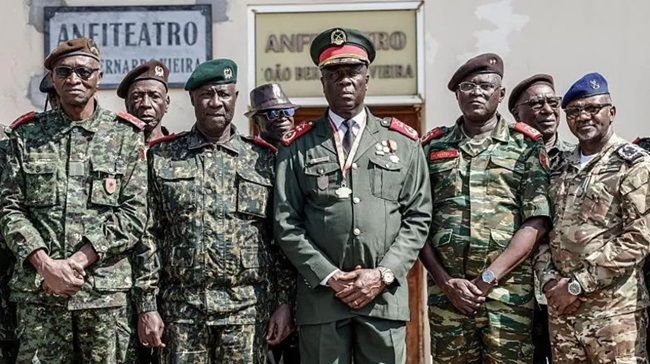
General Horta Inta-A was inaugurated as head of Guinea-Bissau’s military government on November 27, 2025, following a coup d’état the previous day that resulted in the arrest and subsequent flight of President Umaro Sissoco Embaló. The military cited electoral disputes and a plot involving politicians and a drug lord as factors behind the takeover.
Immediate Impact and Military Takeover
On November 26, military officers led by Brigadier General Dinis Incanha arrested President Embaló, declaring total control and establishing the High Military Command for the Restoration of National Security and Public Order. Shortly thereafter, Embaló fled to Senegal. Guinea-Bissau experienced a nationwide internet blackout, intensifying concerns over information suppression.
Leadership Change and Military Government Formation
General Horta Inta-A, the former army chief of staff, took office as the new leader of the military government on November 27. The military government announced a one-year transition period aimed at restoring constitutional governance amid ongoing political turmoil.
Electoral Context and Justifications for the Coup
The coup followed presidential and legislative elections on November 24, in which both incumbent President Embaló and opposition candidate Fernando Dias claimed victory. The military justified their intervention by alleging a conspiracy orchestrated to manipulate electoral outcomes, implicating domestic politicians, foreign actors, and a notorious drug lord.
International Response
Regional bodies swiftly condemned the coup. The African Union and the Economic Community of West African States (ECOWAS) suspended Guinea-Bissau from their activities, reaffirming a zero-tolerance stance toward unconstitutional changes of government. The United Nations Office of the High Commissioner for Human Rights expressed grave concern over reported post-coup human rights violations, noting at least 18 documented cases and urging respect for fundamental freedoms.
Historical and Regional Context
This marks the ninth coup or attempted coup in Guinea-Bissau since its independence in 1974. The country’s chronic political instability is frequently attributed to the intertwining of military power struggles and entrenched drug trafficking networks, which exploit Guinea-Bissau’s position as a key transit hub between Latin America and Europe. These factors continue to undermine democratic institutions and governance.
Transition and Prospects
Led by General Horta Inta-A, the military authorities have pledged a one-year timeline to reinstate constitutional order. Despite these assurances, international observers remain cautious given the nation’s history of recurrent disruptions and the complex influence of organized crime on its politics.
The unfolding situation in Guinea-Bissau highlights the ongoing challenges that fragile states face in maintaining democratic stability amid internal divisions and external pressures, with significant implications for regional security and international narcotics control efforts.