

London, November 30, 2025
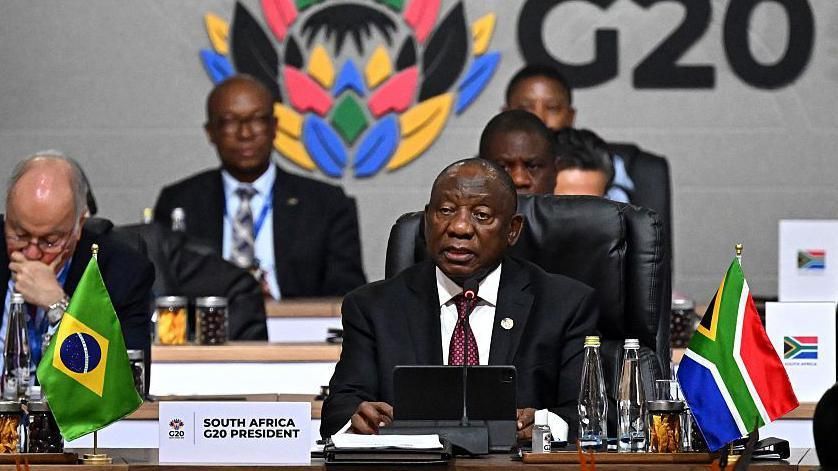
Former U.S. President Donald Trump announced on November 27 that South Africa will be excluded from the 2026 G20 Summit in Miami, citing unaddressed human rights concerns. The move has drawn firm rejection from South African President Cyril Ramaphosa and criticism from international allies, notably India, amid accusations of misinformation and diplomatic tensions.
Trump’s Announcement and Justifications
Donald Trump declared on his Truth Social platform that South Africa would not receive an invitation to the upcoming G20 Summit due to the country’s alleged failure to address human rights issues concerning white communities. In conjunction with this decision, he also threatened to suspend U.S. payments and subsidies to Pretoria. Trump reiterated unfounded claims about a white “genocide” in South Africa as justification for his stance.
South African Government’s Response
President Cyril Ramaphosa responded promptly, rejecting Trump’s claims as based on misinformation rather than grounded diplomacy. He described the exclusion as regrettable and emphasized that South Africa has met its international responsibilities, including the formal handover of the G20 presidency to a U.S. Embassy representative earlier in 2025. South African officials have consistently dismissed the allegations made by Trump regarding human rights abuses.
International Backlash and Diplomatic Implications
The decision has elicited significant backlash, particularly from India. The Indian National Congress Party publicly opposed the exclusion, urging Prime Minister Narendra Modi to defend South Africa’s participation. Party representatives characterized Trump’s move as undermining the core principles of the G20 and disrespectful to Africa and the broader Global South. Opposition leaders in India framed the action as an affront to the African continent and an example of “new imperialism,” emphasizing South Africa’s G20 membership is grounded in its economic importance rather than political favor.
South Africa’s Strategic Engagement
South African officials have indicated that they anticipated this development and are actively engaging with other G20 partners to preserve the continuity of work initiated during their presidency. Pretoria aims to sustain collaboration within the group despite the exclusion, reinforcing its commitment to the G20’s objectives and global economic governance.
The exclusion of South Africa from the 2026 G20 Summit introduces renewed tensions in international diplomacy, raising questions about the intersection of geopolitical influence, economic leadership, and human rights discourse within multilateral forums. The response from South Africa and its allies underscores the complexities involved in balancing national interests and global cooperation amid competing narratives.