

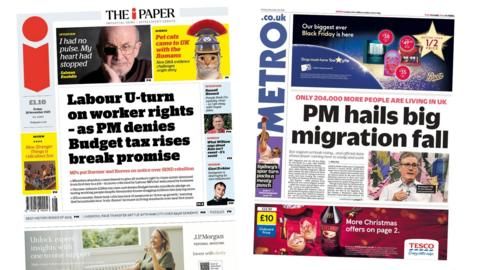
London, December 01, 2025
The UK Government has reversed its initial plan to grant workers immediate protection from unfair dismissal, instead agreeing to a six-month qualifying period following negotiations with trade unions and business groups. This U-turn was announced in late November 2025, ahead of the Employment Rights Bill’s House of Commons debate scheduled for December 8.
Details of the U-turn on workers’ rights
The original manifesto commitment to abolish the two-year qualifying period for unfair dismissal claims entirely from day one has been amended. Instead, employees will now gain protection from unfair dismissal after six months of continuous employment. This adjustment remains a significant reduction from the existing two-year threshold but stops short of the instant protection initially proposed.
Despite this change, certain protections remain effective from the first day of employment, including those related to whistleblowing, discrimination, health and safety concerns, and trade union activities. These retained rights reflect established legal safeguards that the government has confirmed will continue unaffected.
The shift in policy follows intensive discussions aimed at resolving political opposition within Parliament and balancing the interests of businesses and labor organizations. Trade unions and business groups played a central role in shaping the compromise, which the government asserts is a necessary step to advance the Employment Rights Bill before the Christmas legislative recess.
Remaining provisions of the Employment Rights Bill
Beyond the unfair dismissal qualifying period, the Employment Rights Bill proposes several other significant reforms to enhance workers’ rights. From April 2026, new statutory entitlements such as sick pay and paternity leave will come into effect from an employee’s first day. The legislation also includes the creation of a Fair Work Agency tasked with overseeing fair labor practices.
These measures are designed to support a broader agenda of improving workplace fairness and employee well-being, demonstrating a pragmatic approach to labor reform despite the scaled-back changes to dismissal protections.
Political and business responses
The government’s compromise has been met with mixed reactions. Some Conservative backbenchers have expressed frustration over the apparent dilution of the original pledge, viewing the U-turn as a setback for worker protections. Conversely, business groups generally welcomed the decision as preserving some flexibility in hiring practices while still delivering meaningful employee rights enhancements.
Trade unions, although critical of the delay in achieving full day-one dismissal protection, acknowledged progress compared to the status quo and remained engaged in discussions on further reforms.
Context and background
The Employment Rights Bill is a centerpiece of the UK Government’s industrial relations agenda, aiming to modernize protections for employees and address long-standing calls for reform. The qualifying period for unfair dismissal has been a contentious issue, with advocates pushing for immediate rights to reduce job insecurity and opponents warning of burdens on employers.
No verified information is available regarding any significant migration decline connected to these legislative developments.
As the Bill advances through Parliament, the government’s ability to balance competing interests while fulfilling policy commitments will remain under scrutiny. The forthcoming House of Commons debate on December 8 will be a critical moment for the passage of these worker rights reforms, determining their final scope and implementation timeline.