

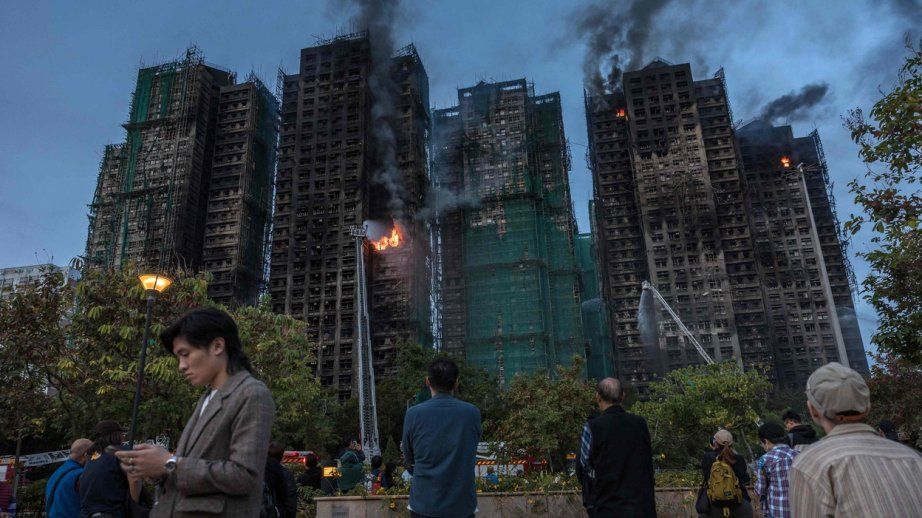
Tai Po District, Hong Kong, December 01, 2025
A devastating fire erupted on November 26, 2025, at Wang Fuk Court, a large residential complex in Tai Po District, Hong Kong, killing at least 151 people and injuring over 79. The blaze, fueled by safety violations, led to one of the deadliest residential building fires worldwide in decades.
Death Toll and Injuries
As of December 1, the confirmed fatalities have risen to at least 151, surpassing earlier reports of 146 deaths. Rescue teams continue to contend with over 79 injured individuals, including 11 in critical condition. More than 30 residents remain unaccounted for, with authorities investigating whether some of the unidentified remains recovered may belong to the missing.
Rescue and Recovery Operations
Rescue efforts concluded on November 28 after firefighters exhausted attempts to locate survivors. Since then, the Disaster Victims Identification Unit has deployed 600 personnel dedicated to body recovery and identification amid the extensive destruction. Despite these efforts, as of November 29, 54 bodies remained unidentified, complicating the final determination of the death toll.
Cause and Fire Safety Violations
Investigations indicate the fire originated on the first floor of Wang Fuk Court and spread rapidly throughout seven of the complex’s eight towers. The swift expansion was attributed largely to the use of non-compliant fire-safety mesh installed on scaffolding surrounding the buildings. These safety breaches have prompted scrutiny over regulatory enforcement and have underscored significant lapses in fire prevention measures within the complex.
Impact on Residents and Complex Details
Wang Fuk Court housed approximately 4,600 residents across eight towers in Tai Po District, part of Hong Kong’s New Territories region. The fire trapped many individuals inside their apartments, with bodies subsequently located in stairwells and on rooftops, highlighting the severity and suddenness of the inferno. The affected towers were extensively engulfed, revealing vulnerabilities in high-density urban housing infrastructures.
Government Response and Public Reaction
The Hong Kong government has faced widespread criticism for apparent failures to enforce safety regulations and for attempts to suppress public criticism in the aftermath. The official mourning period has seen thousands of residents converge to honor the victims, leaving tributes such as flowers, toys, and notes, reflecting the tragedy’s profound community impact, especially as many victims were children and elderly residents.
Significance and Broader Implications
This fire is recognized as the deadliest residential building disaster worldwide since 1980. It has amplified urgent calls for enhanced fire safety standards in densely populated urban settings to prevent future tragedies. The ongoing identification of victims and the finalization of the death toll underscores the complexity and sensitivity surrounding this disaster. As investigations proceed, lessons learned may shape future policies and enforcement efforts to safeguard vulnerable populations in similar housing environments.