

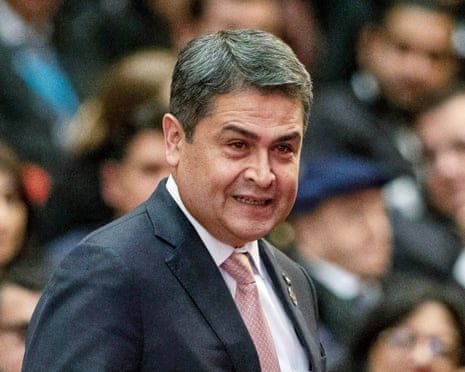
New York, December 01, 2025
Former U.S. President Donald Trump has announced plans to pardon ex-Honduran President Juan Orlando Hernández, convicted in the United States for drug trafficking and weapons offenses, if Trump wins the 2024 presidential election. This decision could have significant repercussions for U.S.-Central American relations and international anti-drug efforts.
Juan Orlando Hernández was convicted in March 2024 in a U.S. court on charges of facilitating Honduras as a major cocaine transit point and engaging in weapons offenses. He received a 45-year prison sentence after prosecutors proved his involvement in accepting bribes from drug cartels and shielding traffickers through his political office.
Hernández served as president of Honduras from 2014 to 2022 and was regarded as a crucial U.S. ally in Central America, especially on migration control and regional security issues. His conviction is notable given the rarity of former heads of state being prosecuted in the United States on such charges. The case also followed the earlier conviction of his brother, Juan Antonio “Tony” Hernández, for similar crimes.
Trump’s Pardon Announcement and Reactions
Trump’s stated intention to pardon Hernández has ignited controversy within political and diplomatic circles. Critics warn that such a pardon would undermine the integrity of U.S. judicial processes, weaken the credibility of America’s ongoing war against drug trafficking, and could effectively excuse high-level corruption and criminal activity for political reasons.
Conversely, some supporters argue that pardoning Hernández may recalibrate U.S. relations with Central American governments and promote more collaborative approaches to migration and security policy. However, experts caution that the move risks damaging U.S. standing in international law enforcement partnerships, especially concerning transnational organized crime.
Background and Implications
Hernández was extradited to the United States in 2022 following legal proceedings spurred by corruption and drug trafficking investigations linked to Honduras’ political elite. His trial spotlighted the extensive influence of drug cartels in Central America and the U.S. government’s readiness to hold foreign political leaders accountable under its jurisdiction.
Should Trump succeed in the November 2024 election and execute the promised pardon, it could represent a significant shift in U.S. foreign policy strategy in the region. The decision may also raise questions about the application of justice and the political motivations behind presidential pardons in high-profile international criminal cases.
Ongoing legal and diplomatic dialogue continues between involved parties in the U.S. and Honduras, underscoring the complex intersection of international law, global drug enforcement, and diplomatic relations. The ultimate outcome will likely influence future U.S. engagement in Central American security and anti-drug initiatives.