

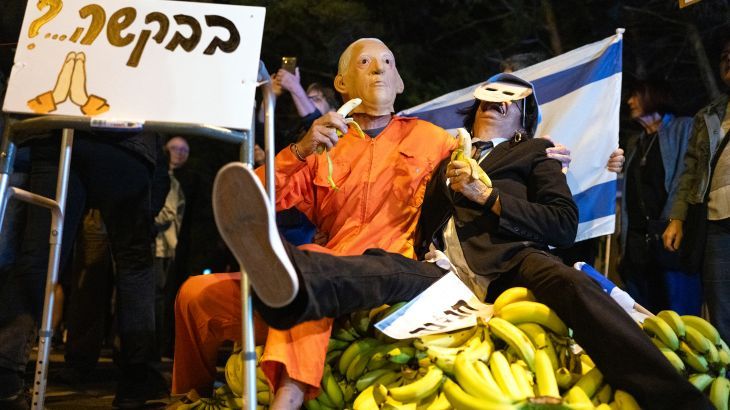
Tel Aviv, December 01, 2025
Israeli Prime Minister Benjamin Netanyahu has formally requested a presidential pardon from President Isaac Herzog amid his ongoing corruption trial, aiming to halt a legal process that has spanned nearly a decade and drawn intense political and legal scrutiny.
Netanyahu faces charges of fraud, breach of trust, and accepting bribes in three separate cases, with the trial ongoing for almost six years and expected to continue further. He denies all allegations, characterizing the legal proceedings as politically motivated. In a televised address, Netanyahu described the trial as a “deep state” conspiracy targeting him and sought the pardon to unify the nation and end a divisive, prolonged episode amidst shifting regional dynamics.
The request for presidential clemency marks an extraordinary legal and political maneuver in Israel. Under Israeli law, while a presidential pardon is a powerful act, it cannot, by itself, halt ongoing trial proceedings unless the Attorney General intervenes to stop the case. Experts highlight that issuing such a pardon without an admission of guilt or demonstration of remorse — both notably absent in Netanyahu’s request — is highly unusual and controversial. Opposition leaders have strongly opposed the move, underscoring that any pardon should logically follow acknowledgment of wrongdoing and political retirement.
Responses to Netanyahu’s pardon request sharply divide the Israeli political landscape. Key government figures, including Defense Minister Israel Katz, have voiced support, aligning with Netanyahu’s stance. Conversely, opposition parties and watchdog organizations condemn the plea as a threat to the integrity of Israel’s justice system. Former U.S. President Donald Trump has publicly urged the Israeli government to grant clemency, reiterating claims that the charges against Netanyahu are politically driven and unjust. President Herzog’s office has rejected reports of any conditional plea deals, affirming that the president will consider the request with due diligence and legal scrutiny.
This unprecedented pardon plea must be understood within the broader context of Netanyahu’s lengthy political career and the high-profile nature of his ongoing trials. Serving as Israel’s longest-tenured prime minister, Netanyahu’s legal battles have deeply polarized Israeli society and impacted governance in a period marked by regional volatility and domestic political fragmentation. The trial has tested the resilience of Israeli legal institutions and raised questions about the limits of political power amid allegations of corruption.
The development carries significant implications for Israel’s judicial norms and political stability. Should President Herzog grant the pardon, it would challenge existing precedents about accountability and may reshape expectations for how legal processes intersect with political leadership. Conversely, denial could prolong political tensions and the legal proceedings that have captivated national and international attention. As the situation unfolds, stakeholders across Israel and beyond will be closely monitoring its impact on the country’s democratic institutions and rule of law.