

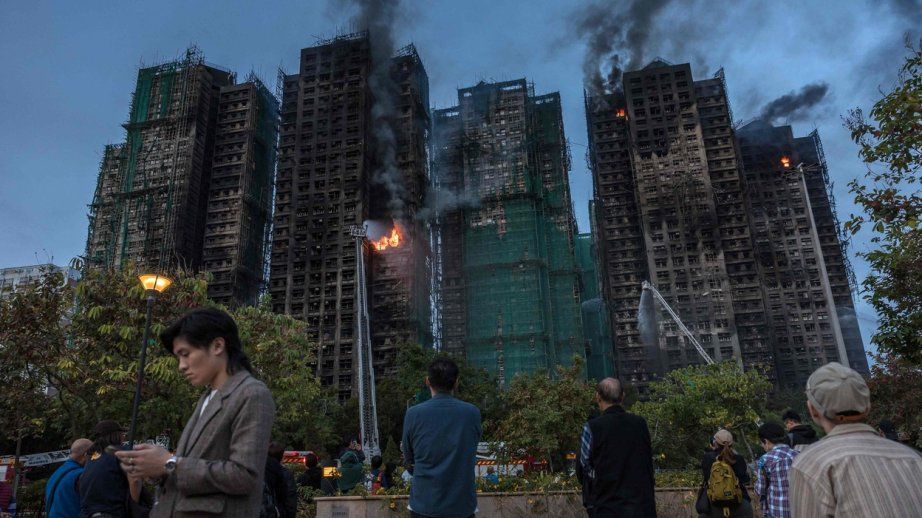
Hong Kong, December 01, 2025
At least 151 people have died and 79 injured following a massive fire that engulfed the Wang Fuk Court residential complex in Tai Po, Hong Kong, on November 26, 2025, making it the deadliest fire in the city since 1948. Investigations have linked the rapid spread of the fire to flammable renovation materials and those responsible have been arrested on manslaughter charges.
Death Toll and Injuries
The blaze at Wang Fuk Court resulted in the confirmed deaths of 151 people, including a firefighter who lost his life during rescue operations. Seventy-nine others were injured, with twelve firefighters among the casualties. Additionally, five construction workers perished. Around 40 individuals remain missing, with identification efforts complicated by severely burned remains.
Event Details and Damage Scope
The fire broke out on November 26, 2025, rapidly engulfing seven of the estate’s eight blocks and nearly 2,000 apartments housing approximately 4,800 residents. The scale and intensity of the fire have made it Hong Kong’s most lethal residential fire in nearly eight decades, marking a devastating blow to the community and city.
Cause and Investigation
Authorities identified key factors that accelerated the fire’s spread, including the use of highly flammable polystyrene foam in renovation work and non-fire-retardant green mesh covering bamboo scaffolding. It was also found that the fire alarms in the building were not functional during the incident. Investigations uncovered attempts to conceal substandard materials in inaccessible areas of the construction site to evade inspector detection.
Thirteen individuals have been arrested on suspicion of manslaughter, including three contractors from the renovation company responsible for the compromised materials and safety lapses. The case underscores severe regulatory failures and raises questions on construction oversight amid ongoing building renovations.
Emergency Response and Public Mourning
The Hong Kong government promptly established a support fund for victims’ families and declared a three-day official mourning period starting November 29. Government celebrations were suspended, and flags flew at half-mast as thousands gathered at the fire site and related locations to pay their respects. Condolence books were made available, and the MTR Corporation opened station concourses to assist victims in replacing damaged travel cards.
Public and Political Reactions
This tragedy has intensified public anger and calls for independent investigations into building safety enforcement and renovation practices. It also highlights glaring safety gaps in high-density residential housing, prompting scrutiny of regulatory agencies and contractors involved. The controlled criticism by authorities has done little to alleviate public concerns over accountability and future prevention.
Historical Context and Broader Implications
The Wang Fuk Court fire is the deadliest residential fire in Hong Kong since 1948, reflecting long-standing challenges in balancing urban renovation with stringent fire safety standards. As the city continues to undergo extensive building redevelopment, the disaster emphasizes the urgent necessity for rigorous inspections, fire safety measures, and transparent regulatory oversight to prevent recurrence.
The ongoing investigation and legal proceedings will likely shape future building safety policies and enforcement in Hong Kong. The tragedy serves as a stark reminder of the human cost of regulatory failures and the critical importance of protecting residents in high-density urban environments.