

Cape Town, December 06, 2025
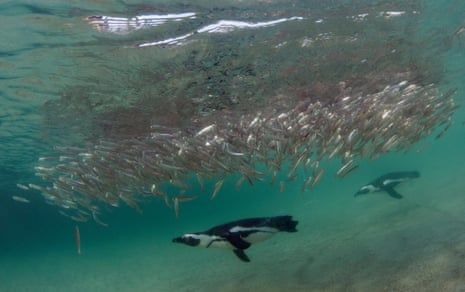
Around 60,000 African penguins have starved to death at key breeding colonies off South Africa’s Western Cape in recent years due to a collapse of sardine and anchovy stocks driven by climate change and overfishing, according to a new scientific study.
A catastrophic 95% population decline has been recorded at major penguin colonies on Dassen and Robben Islands, where food scarcity has resulted in mass starvation and sharp drops in breeding success and adult survival. The African penguin (Spheniscus demersus), an endangered species native to the region, faces a severe threat to its wild population.
Researchers tracked penguin foraging behavior using satellite tags, revealing that as sardines and anchovies have shifted eastward and offshore—largely due to warming sea temperatures and changing ocean currents like the Benguela Current—penguins have been forced to travel longer distances, dive more deeply, and expend greater effort with minimal food returns. This mismatch between penguin colonies and their primary prey has been a critical factor in the mortality event.
Sardines and anchovies are vital to the African penguin’s diet, but these small pelagic fish are vulnerable to environmental changes and intense commercial fishing pressures targeting them for human consumption and fishmeal production. The collapse of these fish stocks thus directly undermines penguin survival and reproductive success.
In response, the South African government and conservation organizations have enacted emergency measures, including a 10-year commercial fishing ban on sardines and anchovies around six key penguin breeding sites such as Robben and Dassen Islands. Additional efforts include artificial nest programs aimed at boosting breeding success and the establishment of new colonies nearer remaining fish stocks. Calls have been made for expanding marine protected areas and adopting climate-resilient fisheries management to safeguard both penguins and their prey long-term.
This crisis exemplifies a broader ecological pattern where climate change disrupts marine food webs, affecting predators not through direct environmental disasters but through nutritional scarcity. The African penguin may face functional extinction in the wild within decades if current trends continue without effective intervention. The event underscores the urgency for integrated ocean management policies that incorporate climate change mitigation to stabilize fish populations and preserve biodiversity.
Continued scientific monitoring will determine whether conservation efforts and fishing restrictions can halt or reverse the decline. The survival of Africa’s iconic penguin species ultimately depends on stabilizing pelagic fish stocks, reducing global carbon emissions to slow ocean warming, and expanding protected marine habitats to foster ecosystem resilience.