

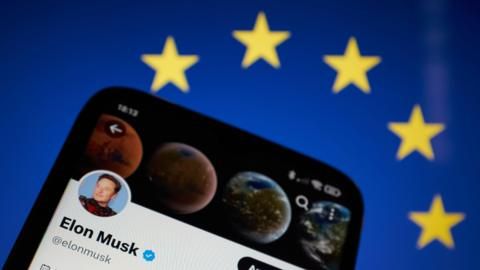
London, December 09, 2025
Elon Musk’s social media platform X has barred the European Commission from advertising on its site following a €120 million fine imposed for alleged breaches of its advertising policies. The ban has introduced a new front in the escalating tensions between digital platforms and regulatory authorities.
X’s Fine and Ban on European Commission Advertising
The European Commission (EC) was recently hit with a €120 million penalty by X, formerly known as Twitter and owned by Elon Musk. This unprecedented fine targets one of the EU’s key institutions and accuses it of violating advertising rules on the platform. Subsequent to the fine, X has formally prohibited the EC from running any advertisements on its network, marking one of the few instances where a government entity is effectively blacklisted by a major social media company.
Context: X under Elon Musk’s Leadership
Since its rebranding from Twitter to X, the platform under Musk’s stewardship has been known for stringent enforcement of new policies, often clashing with regulators, advertisers, and governments worldwide. X’s action against the EC fits a pattern of increasing assertiveness in managing advertising spaces and institutional compliance, reflecting Musk’s broader vision for platform control. The specific breaches that caused this massive fine remain partially undisclosed but center on compliance with X’s advertising standards.
Implications for EU Digital Policy and Regulation
The ban complicates the European Commission’s ability to communicate public policy and campaigns through one of the most popular digital media channels. As the EC plays a pivotal role in regulating digital markets and services across the European Union, this dispute highlights frictions in applying EU digital regulations—such as the Digital Services Act—to powerful tech platforms with far-reaching influence.
Digital regulators and policymakers face the challenge of balancing platform sovereignty with public institutional access to digital advertising. This case may prompt a reassessment of how digital communication channels are governed within the EU and could spur legislative or enforcement action to delineate platform responsibilities toward government advertisers.
Potential Political and Legal Developments
The European Commission is expected to respond diplomatically or legally to contest the fine and ban. Given the EC’s mandate and political weight, legal challenges or negotiation efforts to resolve the dispute are anticipated. This event could set a precedent for how governments engage with global digital platforms and may shape future regulatory frameworks.
Broader Industry Impact and Platform Governance
X’s decision reflects growing industry trends where private platforms exert significant control over public and governmental advertising. Such moves raise concerns about the unchecked power these companies hold in shaping public discourse and communication avenues. Other digital operators may adopt similar hardline stances toward governmental bodies if they breach platform policies, potentially altering how public institutions approach digital outreach globally.
For advertisers and users, this development could influence perceptions of platform neutrality, content governance, and trustworthiness—factors essential for the sustainability of digital ecosystems.
This unfolding conflict exemplifies the broader struggle over digital governance, platform autonomy, and regulatory oversight in an increasingly networked world. How the EC and Musk’s X reconcile their differences will be closely watched by business, political, and academic communities alike, as it will impact the future shape of digital public communication and regulation.