

London, December 10, 2025
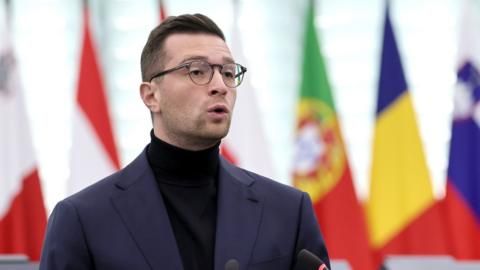
French far-right leader Jordan Bardella has affirmed his alignment with the United States’ warnings regarding Europe’s geopolitical and security challenges. Bardella additionally reinforced this stance through a recent meeting with Nigel Farage, the UK’s anti-immigration Reform UK party leader, signaling increased far-right cooperation across Europe and the UK.
Jordan Bardella’s Position on U.S. Warnings
Jordan Bardella, president of France’s National Rally, openly endorses much of the United States’ cautions about Europe’s security and immigration issues. Speaking to the BBC, Bardella indicated that his views largely converge with those expressed by U.S. officials, particularly in areas concerning the future stability and sovereignty of Europe. This shared perspective reflects growing concerns within European far-right circles about the effects of migration flows and geopolitical vulnerabilities in the continent.
Meeting with Nigel Farage and Far-Right European Cooperation
Bardella’s recent encounter with Nigel Farage, a prominent figure in the UK’s Reform UK party known for its anti-immigration stance, underscores a strategic alliance between right-wing populists in Europe. This collaboration highlights a united front focused on contesting mainstream European Union policies and promoting national sovereignty, especially around contentious issues such as immigration control and border security. The meeting symbolizes a broader trend of cooperation among far-right leaders seeking to influence political discourse across national borders.
Significance of the Emerging Alignment
The convergence of Bardella’s stance with U.S. warnings marks a critical moment in European political dynamics. It suggests that rhetoric from Washington concerning Europe’s challenges is resonating beyond transatlantic policy circles into domestic political narratives. This alignment reinforces far-right critiques of the European Union and amplifies calls for increased national control and security measures.
Implications for European Political Discourse
As Bardella and like-minded leaders forge closer ties, their combined influence could shape debates on immigration policy, national sovereignty, and security strategy throughout Europe. This networked approach evidences a shift towards more coordinated far-right activism, potentially affecting policymaking in member states and complicating European Union consensus-building. For business leaders, policymakers, and informed global citizens, the growing interplay between U.S. warnings and European far-right agendas will remain a critical factor in assessing the region’s future socio-political trajectory and stability.