

London, December 01, 2025
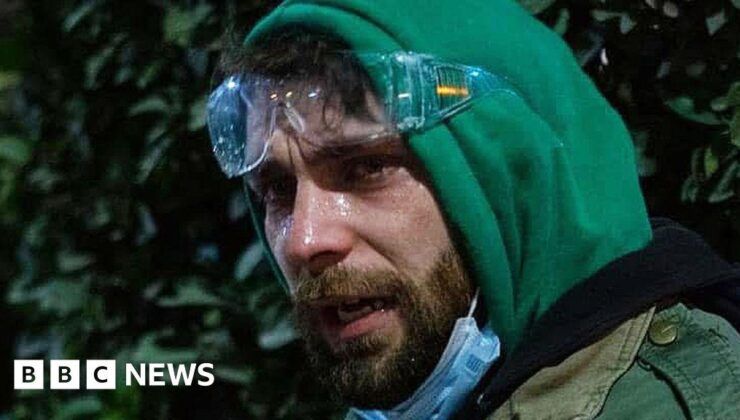
Georgian authorities allegedly deployed Camite, a dangerous chemical tear gas, against protesters in Tbilisi during November–December 2024, according to a BBC investigation uncovering the use of a toxic World War I-era weapon amid mass demonstrations against EU integration delays.
Chemical Agent: Camite
Camite, also chemically known as Bromobenzyl cyanide or by the code CA, was developed by France during World War I as a form of tear gas. It is highly toxic and distinct from more common riot-control agents like CS gas. Exposure causes severe irritation and damage to the eyes, respiratory tract, and skin, with symptoms such as prolonged coughing, vomiting, skin burns, and difficulty breathing lasting several weeks.
Although Camite was largely phased out worldwide after the 1930s due to its harmful effects, the BBC’s investigation revealed evidence of its continued use by Georgian security forces as recently as 2024.
Investigation Evidence
The BBC documentary’s findings drew on multiple sources to verify the chemical’s use at protests triggered by the Georgian government’s decision to pause EU integration talks. Testimonies included those from medical professionals treating affected demonstrators, whistleblowers within the riot police acknowledging the use of a chemical agent beyond standard tear gas, and chemical weapons experts analyzing residue collected from water cannon dispersal sites.
Additionally, internal inventory documents dating back to 2019 referenced certain unidentified chemicals—labelled as “Chemical liquid UN1710” and “Chemical powder UN3439″—that align with substances consistent with Camite. Protesters reported symptoms that persisted for weeks, markedly more severe than what is typical for common riot control agents.
Context of Use
During intense clashes in Tbilisi, Georgian riot police reportedly sprayed protesters with water cannons contaminated with this toxic chemical. The protests erupted in late 2024 as public outcry surged over political decisions related to EU integration, drawing large crowds and leading to heavy-handed crowd control methods.
The use of Camite raises profound concerns about the deployment of a hazardous, outdated chemical weapon against civilian populations within a European democracy in the 21st century. Such practices potentially violate international norms concerning chemical weaponry and human rights protections.
Government and Civil Society Responses
The ruling party, Georgian Dream, dismissed the BBC’s findings and threatened legal proceedings against the broadcaster. Meanwhile, Georgian civil society organizations have urged government transparency, demanding a full disclosure of the types and compositions of chemical agents used in crowd control operations.
Many protesters suffering lingering health issues view the investigation as confirmation of their accounts and a step towards accountability. Human rights advocates highlight that the use of Camite not only endangers public health but also undermines democratic principles and international chemical weapon conventions.
As international attention focuses on these revelations, questions remain about regulatory oversight, governmental accountability, and the future use of chemical agents in law enforcement within Georgia.