

Berlin, December 06, 2025
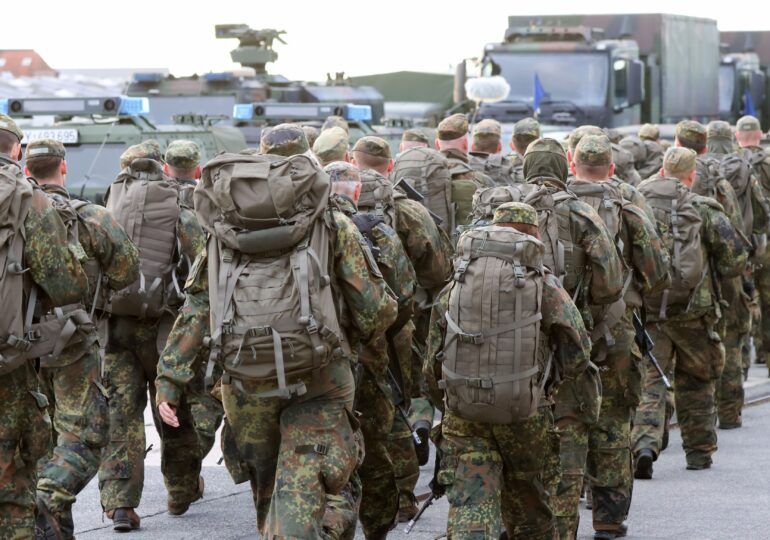
Germany’s federal parliament has approved a new voluntary military service programme for 18-year-olds, set to begin in January 2026, aiming to strengthen national defense and enhance youth engagement amid ongoing security challenges.
Details of the Programme
Germany’s Bundestag passed the measure on December 5, 2025, with 323 votes in favor and 272 against. The law introduces a voluntary military service option for young Germans born in 2008 and thereafter, offering enlistment terms ranging from seven to 23 months, including a six-month probationary period. Participation is open to both men and women who have completed full-time education and hold German citizenship, with a minimum enlistment age of 17.
Volunteers will receive monthly compensation between €1,500 and €1,900, alongside benefits such as free medical care, reimbursed train travel, and a mustering-out pay of €100 per month of service — provided they serve for at least six months and one day. Importantly, the programme does not reinstate mandatory conscription; participation remains fully voluntary.
Context and Strategic Imperatives
The programme addresses recruitment and readiness challenges faced by the Bundeswehr since the suspension of compulsory military service in 2011. Rising geopolitical tensions, notably Russia’s ongoing war in Ukraine and increased NATO commitments, have underscored the need for a more robust defense posture. The initiative aims to elevate public awareness and interest in military service, thereby bolstering defense capacity and fostering stronger civic-military ties among youth.
A distinctive element is a census-style outreach: all 18-year-olds born in 2008 will receive a questionnaire from the Bundeswehr. Currently, only males are legally required to respond due to constitutional constraints; extending this requirement to females would mandate a constitutional amendment. This outreach mechanism serves to register the eligible cohort comprehensively, even though only a portion may ultimately enlist.
Political and Public Reactions
The voluntary service programme emerged as a compromise amid divergent views within the governing coalition. Conservative parties advocated for mandatory service, while Social Democrats and others opposed compulsory measures, resulting in a minimalist agreement emphasizing voluntary enlistment paired with wide-ranging youth engagement.
Nonetheless, the decision has sparked youth-led protests in several German cities, drawing parallels to climate strikes. Critics argue that the programme could represent a gradual step toward militarization or a nominal reinstatement of conscription.
Comparative European Context
Germany’s move is notably more limited than France’s ongoing debate about reviving universal mandatory national service, which has seen slow and constrained implementation. Both initiatives, however, reflect a broader European reconsideration of youth’s role in national defense and civic duties amid uncertain geopolitical landscapes.
Implementation and Future Outlook
Beginning in January 2026, the Bundeswehr will initiate contact with eligible 18-year-olds to facilitate voluntary enlistment. Authorities will closely monitor enrollment rates, political sentiments, and public feedback to assess the programme’s impact. Any extension of mandatory response obligations to women would require complex constitutional reforms, indicating that compulsory service for females remains a distant prospect.
This policy shift represents Germany’s most substantial effort to deepen military engagement with youth since the end of conscription, signaling a strategic recalibration towards a more visible and socially integrated defense force. Its progress will likely influence debates on national defense, youth policy, and civic identity across Europe in the coming years.