

Bissau, November 27, 2025
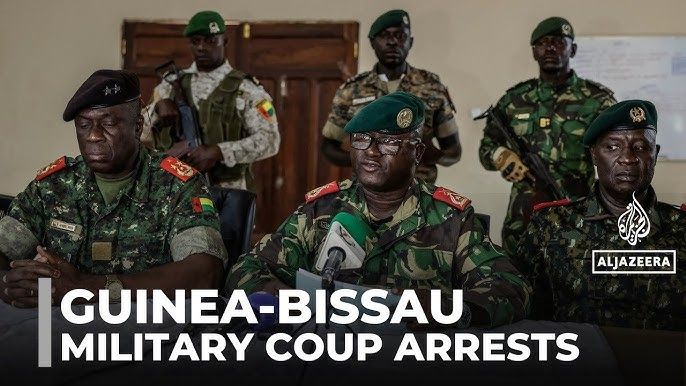
Guinea-Bissau’s military seized power in a coup d’état on November 26, detaining President Umaro Sissoco Embaló and suspending the electoral process days after general elections. The military established a High Military Command for the Restoration of Order, citing a conspiracy to manipulate the election as justification.
Military Takeover and Presidential Detention
On November 26, armed forces in Guinea-Bissau took control of key government institutions, including the presidential palace, interior ministry, and the National Electoral Commission. Gunfire was reported near the presidential palace in the capital, Bissau, as the military announced total control over the country. President Umaro Sissoco Embaló, who was seeking reelection, was detained by the soldiers.
Following the operation, the military suspended the announcement of the electoral results, which had been scheduled after the general elections held on November 23. The military declared the establishment of a High Military Command for the Restoration of Order to oversee governance and restore stability.
Justification Cited by the Military
The coup leaders justified their actions by alleging the existence of a conspiracy involving domestic political figures, foreign elements, and a drug lord aimed at distorting the election outcomes and destabilizing the nation. The military accused these actors of planning to manipulate the electoral process to undermine national order.
In addition to seizing power, the junta suspended media activities, imposed border closures, and cut internet access across the country. These measures were implemented to consolidate control and limit civilian movements and communications.
Historical Context of Political Instability
Guinea-Bissau has experienced chronic political volatility since gaining independence from Portugal in 1974. The November 2025 coup marks the ninth such military intervention, following previous coups and attempted coups— notably in 2012, 2022, and earlier in 2023—many targeting President Embaló. These recurrent events have compounded legitimacy crises in presidential transitions and weakened democratic institutions.
The frequent disruptions have long impeded stable governance and economic development, raising concerns among international observers and business communities about the country’s political trajectory.
Impact on Electoral Process and Governance
The suspension of electoral results and the military assumption of control have disrupted the democratic process and cast uncertainty over Guinea-Bissau’s political future. With the High Military Command administering the government, the timeline and conditions for restoring civilian rule remain unclear.
The closure of borders and media outlets restrict information flow, potentially limiting public and international oversight. These security measures reflect the junta’s intent to assert authority in a fragile environment marked by previous coups and political fractures.
The situation will demand close monitoring as political actors, regional organizations, and international stakeholders assess responses to the military takeover. The implications for Guinea-Bissau’s governance, economic stability, and regional security are significant, underscoring the persistent challenges facing the nation’s democratic institutions and rule of law.