

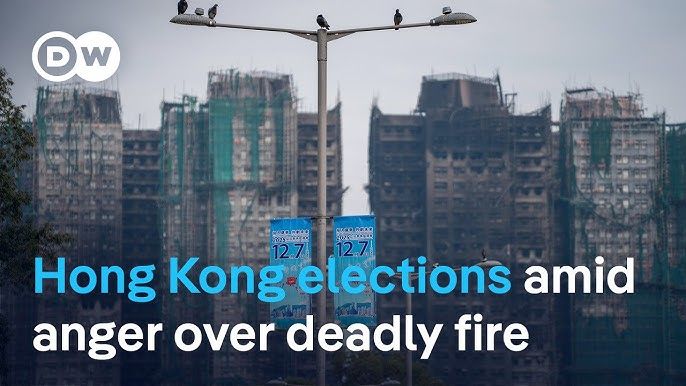
Hong Kong, December 09, 2025
Hong Kong conducted its 2025 Legislative Council election on December 7, electing 90 members under a revised electoral system amid mourning after a deadly Tai Po housing estate fire that claimed at least 159 lives twelve days earlier. The election drew low voter turnout and reflected ongoing concerns over reduced democratic representation.
Electoral Overview
The election assembled the new 8th Legislative Council of Hong Kong with 90 members selected through three distinct electoral bodies. Forty legislators were chosen by the Election Committee, thirty by functional constituencies representing trade and business sectors, and twenty were directly elected via geographical constituencies. This structure follows the 2021 reforms that further limited directly elected seats to 22 percent of the council, a move criticized by democratic observers as diminishing Hong Kong’s political plurality and democratic accountability. The newly elected council is scheduled to serve a four-year term starting January 1, 2026.
Voter Turnout and Public Response
Authorities sought to energize voter participation despite the somber mood reverberating from the devastating fire tragedy in Tai Po, a public housing estate that resulted in one of the deadliest incidents in recent memory. Voter turnout reached 31.9 percent, marking a slight improvement from the historically low 30.2 percent turnout in the 2021 election, yet remaining substantially below the 52.3 percent turnout recorded in 2016. Analysts note that the recent tragedy may have suppressed electoral enthusiasm or distracted from political engagement as residents focus on communal mourning and safety concerns.
Political Context
The political landscape of this election starkly contrasts with Hong Kong’s more pluralistic past. The pro-democracy camp, once a significant part of the city’s political fabric, has effectively vanished from this contest amid intensified political tightening and electoral reforms. Candidates largely sprang from pro-establishment factions and business-aligned groups, underscoring a consolidation of power favoring Beijing-aligned governance. Previous sessions of the Legislative Council were criticized for lacking substantive debate or meaningful opposition, a pattern expected to continue in the newly formed body.
Implications and Future Developments
Business leaders within the council have voiced support for the gradual reintroduction of more directly elected seats, citing benefits for Hong Kong’s international image and alignment with the Basic Law’s stipulations on political representation. Such suggestions come amidst concerns that the current electoral framework may hinder Hong Kong’s democratic development and political openness, which remain crucial to its role as a global financial hub. With the council now seated, attention will turn to how these members address governance challenges in a city coping with tragedy and evolving political rules.
Hong Kong’s 2025 Legislative Council election, held under exceptional circumstances, embodies the city’s ongoing political transformation and contestations over democratic representation, amid a deeply affected society seeking governance stability and trust.