

Hong Kong, November 28, 2025
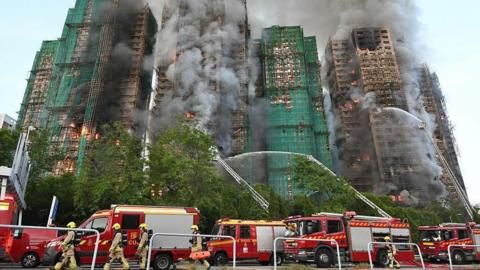
A devastating fire that broke out on November 26, 2025, in the Tai Po district of Hong Kong has claimed at least 94 lives, injured dozens, and left hundreds homeless. The blaze originated from bamboo scaffolding netting outside an apartment complex and rapidly engulfed seven buildings, prompting urgent safety scrutiny.
Fire Origin and Spread
The fire began on the bamboo scaffolding green netting of Block F in Wang Fuk Court, a residential complex in Tai Po. Flames spread unusually fast, engulfing seven adjacent apartment buildings. Authorities described the incident as a five-alarm fire, the highest classification, and the second such major blaze since Hong Kong’s handover in 1997.
Casualties and Impact
At least 94 people have been confirmed dead, including one firefighter, while dozens more suffered injuries. Hundreds of residents were displaced amid the rapid evacuation and emergency response. This fire ranks as the sixth deadliest in Hong Kong’s history, with the last fire causing a higher death toll occurring in 1948.
Authorities’ Assessment and Causes
Officials attribute the unprecedented speed of fire spread partly to the use of flammable and inappropriate netting materials on the bamboo scaffolding. The rapid engulfment of multiple blocks highlighted critical vulnerabilities in construction safety standards. A criminal investigation has been launched to examine safety violations and the precise cause of ignition.
Government and Public Response
The tragedy has sparked widespread public outrage over a disaster many consider preventable. Calls for accountability have intensified, focusing on regulatory enforcement failures related to building and construction safety. In response, the government pledged to phase out bamboo scaffolding materials that contributed to the fire’s rapid progression.
Implications for Building Safety Standards
This incident underscores urgent concerns about Hong Kong’s longstanding reliance on bamboo scaffolding covered with potentially flammable netting in urban construction and repair work. The disaster has accelerated demands for comprehensive reforms to building safety codes and enforcement mechanisms to prevent such catastrophic events in the future.
The Tai Po apartment fire has brought renewed focus on addressing critical fire safety lapses within densely populated urban environments, emphasizing that stronger regulation and safer construction practices are urgently needed to protect public safety.