

London, December 09, 2025
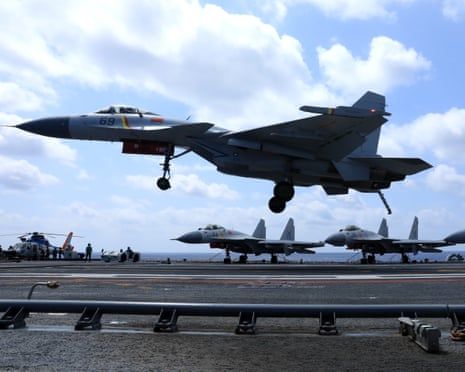
Japan has officially protested to China after Chinese J-15 fighter jets reportedly locked fire control radar onto Japanese F-15 military aircraft near Okinawa on December 7, signaling a potential military threat that Tokyo describes as highly provocative.
Incident Details and Japanese Response
Japanese defense officials report that their F-15 fighters were targeted by fire control radar from Chinese J-15 jets in two separate encounters close to the Okinawa Islands. The radar locking is interpreted in military terms as an indication of possible weapon targeting, forcing Japanese pilots to execute evasive maneuvers. While no physical damage or injuries were reported, Tokyo regards the incidents as serious provocations. Prime Minister Sai Teichi summoned the Chinese ambassador to lodge a formal protest and vowed a firm response to what Japan views as a direct threat to regional stability.
China’s Denial and Counter-Accusations
Beijing categorically denies the allegation that its J-15 jets locked radar on Japanese aircraft. Chinese officials accuse Japan of unauthorized incursions into designated Chinese military training zones south of Okinawa. Furthermore, China claims that Japan’s radar-lock accusations are fabrications intended to manipulate public opinion and international perception. This exchange highlights deepening mistrust between the two powers over contested airspace and maritime boundaries.
Military Assets and Operational Context
The Chinese J-15 fighters involved operate from the Liaoning aircraft carrier, which was conducting maneuvers in proximity to Okinawa along with accompanying guided-missile destroyers. Japan’s deployed aircraft were F-15 fighters regularly tasked with air defense operations in the East China Sea region. The use of fire control radar locking is significant because it represents a warning or preliminary targeting act, escalating the risk of military engagement in a volatile theater.
Geopolitical Significance and Regional Risks
The East China Sea near Okinawa remains a sensitive zone marked by frequent military encounters involving Japan, China, and other regional actors. The radar locking incidents have been interpreted by security analysts as signs of China’s increased assertiveness and Japan’s heightened alertness in safeguarding national airspace. Military experts caution that such provocations risk unintentional escalation, especially since pilots might receive engagement authorization under high-stress conditions.
Both Tokyo and Beijing maintain adversarial postures amid broader strategic rivalries across the Indo-Pacific. The incident underscores the urgent need for dialogue mechanisms to mitigate accidental conflicts in contested areas. As tensions continue, regional stakeholders remain watchful for further developments that could impact peace and economic stability in one of the world’s most crucial maritime corridors.