

Oita City, November 23, 2025
A devastating fire erupted in the Saganoseki district of Oita City, Kyushu, on the evening of November 18, 2025, destroying over 170 buildings and engulfing nearly 49,000 square meters. This blaze, one of the largest urban fires in Japan in nearly half a century, resulted in one fatality and significant displacement amid strong winds that fueled its rapid spread.
Scope of the Fire and Immediate Impact
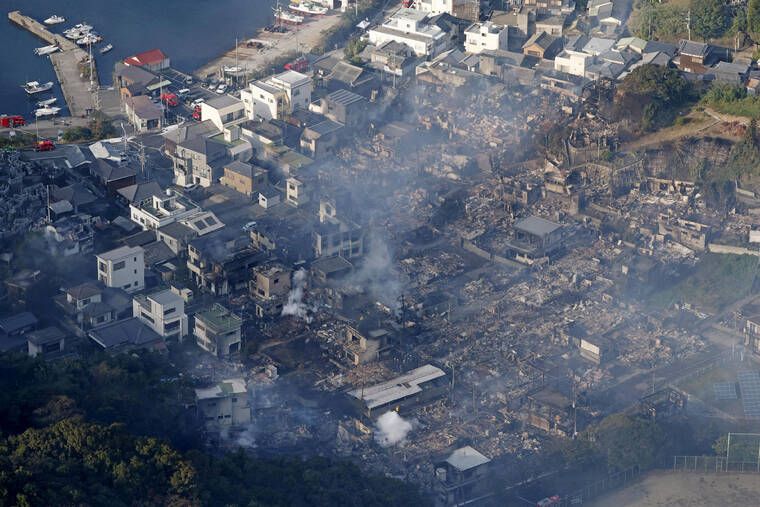
The fire, which broke out in a densely populated residential area near a fishing harbor, quickly escalated, consuming an area roughly equivalent to seven soccer fields. With more than 170 buildings destroyed, the extensive damage left 175 residents evacuated to emergency shelters. Power outages affected approximately 350 households during the height of the emergency.
Local fire departments mobilized 17 firefighting vehicles, while the Japan Self-Defense Forces supported the response efforts, including aerial assistance from military helicopters. Despite successful containment efforts, embers remained active days after the initial outbreak, raising concerns about reignition.
Casualties were reported with one person losing their life and a woman hospitalized with mild burns. Authorities have prioritized the welfare of affected residents, emphasizing emergency medical and shelter provisions as temperatures drop in the approaching winter months.
Cause and Environmental Conditions
Investigations into the cause of the fire are ongoing, though preliminary reports highlight the role of strong winds in exacerbating the situation. The flames spread not only through the urban area but also reached nearby forested slopes and an uninhabited island, indicating a complex fire environment influenced heavily by natural elements. These conditions underline the challenges that climate-related factors pose to urban safety and emergency management.
Historical and Regional Significance
This fire marks the worst urban conflagration in Japan in 48 years, drawing attention to the vulnerability of older, closely packed neighborhoods particularly susceptible to rapid fire spread. The disaster reflects broader concerns about urban resilience amid rising climate hazards like intensified winds, which can transform localized incidents into major emergencies.
The destruction of a vital residential and fishing community affects not only local residents but also regional economic activities tied to the harbor. Aerial footage of thick smoke and rubble symbolizes the scale of loss and disruption.
Government Response and Support
Prime Minister Sanae Takaichi conveyed condolences to the victims’ families and pledged the government’s full support for recovery efforts. The official response emphasizes coordinated relief strategies, reconstruction assistance, and preventive measures to mitigate future risks. The involvement of the Self-Defense Forces reiterates the national priority placed on managing this crisis.
Authorities continue to monitor the area closely to extinguish lingering embers and prevent further damage. Recovery plans are being formulated to assist displaced residents and rebuild the devastated district.
As Japan confronts this rare but severe urban fire event, the incident serves as a critical reminder of the necessity for resilient infrastructure, robust emergency response systems, and adaptive strategies to address evolving environmental threats. The tragedy in Oita is a call to policymakers, emergency planners, and communities to bolster safeguards against similar disasters in the future.