

Mumbai, November 23, 2025
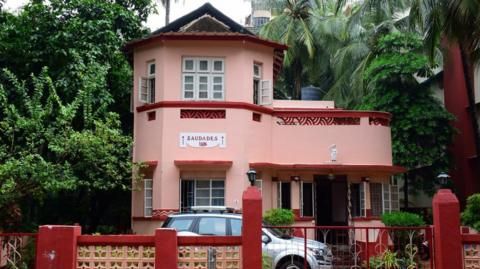
Mumbai marks the centenary of its Art Deco architectural legacy, a significant cultural milestone reflecting one of the largest and most coherent collections of Art Deco buildings in Asia and globally. This century-old heritage, rooted in early 20th-century urban expansion, continues to shape the city’s identity and urban landscape.
Significance of Mumbai’s Art Deco
Mumbai’s Art Deco ensemble represents a distinct architectural epoch, distinguished by its scale and uniformity across the city. Established mostly during the interwar period, it stands as a vital testament to global modernist design trends merging with local urban growth. Its importance extends beyond aesthetics, symbolizing Mumbai’s emergence as a cosmopolitan hub in the early 1900s.
Iconic Structures and Their Architectural Value
Prominent among these buildings is The Regal, completed in 1933 as Mumbai’s first Art Deco building. It was notable for pioneering a multipurpose design with a fully air-conditioned theater, harmonizing with adjacent Victorian architecture. The Eros Cinema, built in 1938 near Oval Maidan, is renowned for its distinctive ziggurat-like tower and bold red sandstone and cream color scheme, capturing the elegance of the Art Deco style. The New India Assurance Building from 1936 exemplifies bold geometric Art Deco with concrete ribbing and decorative motifs. Other important structures such as Dhanraj Mahal, Ram Mahal, and Shiv Shanti Bhuvan contribute ornamental detailing and vertical elements characteristic of the style.
Origins Linked to Urban Development
This architectural legacy is closely tied to the city’s Backbay Reclamation Scheme (1920-1929), a major land reclamation project facilitating new urban development. The reclaimed land enabled the expansion of iconic neighborhoods including Marine Drive and Oval Maidan, where many Art Deco buildings were constructed. The growth was catalyzed by a new generation of Indian architects trained both locally and internationally, who embraced modern materials like reinforced cement concrete and ferrocement, advancing the integration of modernist design within Mumbai’s fabric.
UNESCO Recognition and Preservation Efforts
In 2018, Mumbai’s Victorian Gothic and Art Deco ensembles were designated as UNESCO World Heritage Sites, formally recognizing their cultural and historical significance on a global scale. This recognition has bolstered preservation efforts, with increasing civic engagement to protect precincts such as Oval Maidan from encroachment and degradation. Stakeholders including policymakers and heritage activists continue to advocate for sustained conservation to ensure these architectural treasures endure.
As Mumbai approaches the next century of its Art Deco heritage, the city’s preserved buildings remain not only architectural landmarks but also symbols of a transformative period in its urban and cultural history. Their continued protection and celebration highlight Mumbai’s role on the world stage as a custodian of globally important modernist architecture.