

Paris, November 20, 2025
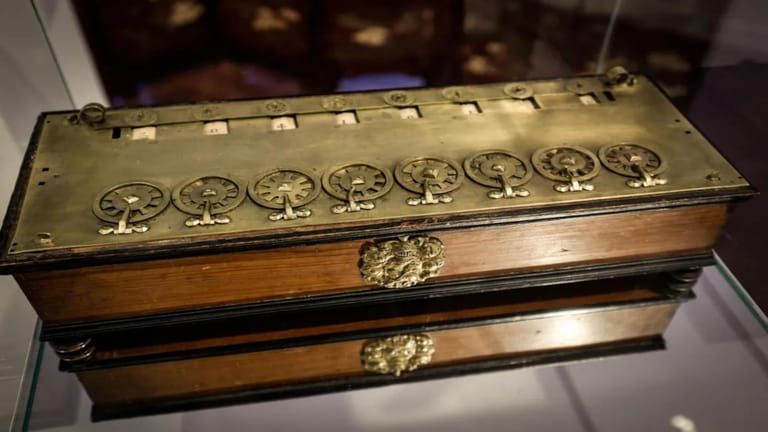
A Paris court has provisionally blocked the auction and export of La Pascaline, the world’s earliest-known mechanical calculator invented by Blaise Pascal in 1642, just days before Christie’s scheduled sale, citing national heritage laws to protect this invaluable scientific artifact.
Court Intervention and Legal Context
The injunction was issued on November 18, 2025, suspending the auction planned at Christie’s Paris, where La Pascaline was expected to sell for €2-3 million. The court decision overrode prior export authorization granted by French cultural bodies, including the Louvre and the National Centre of Arts and Crafts, invoking the French “national treasure” law (“trésor national”). This law prevents export and allows the government an exclusive 30-month period to acquire the artifact to keep it within France.
Artifact Significance
La Pascaline is one of nine surviving original mechanical calculators crafted by Blaise Pascal at age 19, representing a foundational milestone in computing history. This particular device was part of a private collection belonging to the late engineer Léon Parcé. Its technological and historical value lies in its status as the first known mechanical calculator, making it a rare irreplaceable object of global scientific heritage.
Scientific and Cultural Advocacy
The court’s decision followed petitions from prominent scientists and researchers who highlighted the machine’s monumental importance for both French national identity and the broader history of technology. Their intervention emphasized the device’s role as a symbol of early computational innovation needing protection under heritage laws.
Auction House Response and Future Proceedings
Christie’s has confirmed suspension of the sale pending the final judicial ruling, which may take several months. The outcome will determine whether the French government exercises its purchase option to retain La Pascaline domestically, thereby preventing its international sale.
Heritage Law Implications
This case underscores France’s commitment to safeguarding scientific artifacts that hold irreplaceable historical and cultural value. It brings global attention to national heritage protections balancing private ownership rights and preservation of objects that embody critical milestones in human technological progress. The injunction reflects broader challenges in regulating the trade and export of pioneering scientific instruments within the global auction market.
As the legal process unfolds, stakeholders across scientific, cultural, and commercial spheres will closely monitor the outcome, which could set precedent in how nations protect early technological inventions vital to collective human heritage.