

London, November 27, 2025
Israeli airstrikes in southern Lebanon have escalated dramatically in November 2025, including a deadly drone attack on the Ein el-Hilweh Palestinian refugee camp and the targeted killing of a senior Hezbollah leader, raising fears of renewed conflict and widespread humanitarian suffering.
Humanitarian Impact and Security Breakdown
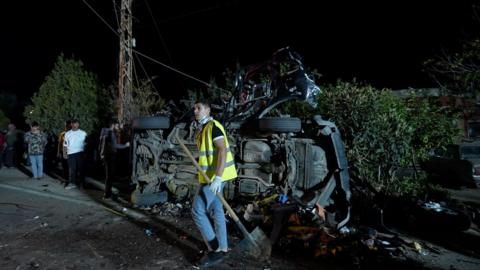
The recent drone strike on November 18 at Ein el-Hilweh, near the southern Lebanese city of Sidon, resulted in at least 14 deaths and numerous injuries within one of Lebanon’s most densely populated Palestinian refugee camps. Civilians report a profound loss of security, with daily life severely disrupted, driving many families to flee the violence to safer northern areas or neighboring countries. Local accounts describe a shattered sense of stability and rising despair as repeated Israeli actions erode long-held perceptions of relative safety in the region.
On November 24, Israel intensified its military campaign by assassinating one of Hezbollah’s top commanders, escalating tensions that threaten to unravel the fragile ceasefire brokered in November 2024. This targeted killing not only risks retaliation from Hezbollah but also destabilizes the tenuous peace that had largely prevented full-scale hostilities over the past year.
Fragile Ceasefire Under Threat
The ceasefire agreement reached in late 2024 had controlled major hostilities between Israel and Hezbollah, creating cautious optimism for broader de-escalation in southern Lebanon. However, the recent strikes against both militant leaders and civilian-populated areas mark a significant breach of this agreement. The Israeli military’s approach, which includes operations in densely residential areas such as Ein el-Hilweh, has raised grave concerns regarding civilian casualties and the humanitarian implications of continued strikes.
Hezbollah’s position in Lebanon’s southern regions and its armed capabilities position it as a key player in the conflict. The elimination of one of its senior figures is perceived as a direct challenge, potentially triggering retaliatory attacks and widening the scope of violence across the region.
International Response and Regional Repercussions
The United Nations Human Rights Office and various international human rights organizations have condemned the recent Israeli strikes, warning that systematic attacks on civilian areas threaten ongoing peace efforts and risk broader regional escalation. These bodies have underscored the urgent need to protect civilians and maintain diplomatic channels to prevent the conflict from spiraling further.
Experts from The Soufan Center highlight the situational complexity, noting that violence in southern Lebanon represents a critical flashpoint with implications far beyond Lebanon’s borders. Business leaders, policymakers, and international observers are closely monitoring developments, concerned about the potential destabilizing effects on regional security, economic conditions, and international humanitarian aid efforts.
Broader Implications
The targeting of both civilian populations and key militant figures emphasizes the multifaceted nature of the conflict, where military objectives and humanitarian concerns intersect. The unfolding crisis challenges long-standing perceptions of security in southern Lebanon, stripping communities of their resilience and heightening fears of an expanded conflict.
Given the fragile ceasefire’s current fragility, the international community faces significant pressure to intensify diplomatic efforts. Ensuring stability in Lebanon is not only critical for the country itself but also for maintaining broader Middle East peace prospects and mitigating the risk of further regional volatility. Effective intervention and restraint by involved parties remain essential to prevent a deeper humanitarian crisis and a resurgence of wide-reaching violence.