

London, November 27, 2025
Israeli military operations in south Lebanon have escalated, with air strikes targeting Hezbollah positions and Palestinian refugee camps, including a deadly drone strike on November 18 at Ein el-Hilweh. These attacks have resulted in significant civilian casualties and widespread displacement, deeply impacting communities across southern Lebanon and the Bekaa Valley.
The Scale of Destruction
The recent Israeli drone strike on November 18 in Ein el-Hilweh refugee camp near Sidon killed at least 14 people, marking one of the deadliest incidents in the ongoing campaign. The Israeli Defense Forces (IDF) have confirmed several air strikes across southern Lebanon and the eastern Bekaa Valley aimed at Hezbollah targets. These operations have extended geographically to include areas in southern Syria, reflecting an expansion of the conflict.
Impact on Daily Life and Communities
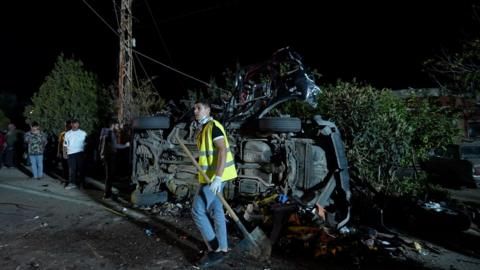
The intensification of military actions has devastated daily life in south Lebanon. Long-standing communities face continuous aerial bombardment, forcing many residents to flee their homes amid escalating danger. Displacement is widespread, with families abandoning their neighborhoods under constant threat. This breakdown of security has obliterated routines and left many uncertain about their future safety or the possibility of returning home.
Military Context and Ceasefire Violations
Israeli officials justify the air strikes as necessary responses to what they describe as violations of security agreements between Israel and Lebanon, specifically targeting Hezbollah, which Israel views as a militant threat. The operations reflect heightened tensions in the region and complicate existing ceasefire arrangements, contributing to increased instability. The inclusion of southern Syria in military operations further broadens the scope of the conflict.
Humanitarian Consequences
Beyond immediate casualties, the military campaign’s effects have extended to the social and psychological fabric of southern Lebanon. The ongoing violence disrupts community structures and intensifies the humanitarian crisis. Residents report severe psychological stress and a pervasive sense of insecurity, with many uncertain whether they will be able to rebuild their lives or see a return to peace. The combination of destruction, displacement, and uncertainty threatens the long-term viability of these communities.
The continuation of Israeli strikes and Hezbollah’s regional presence suggest that the volatile situation in south Lebanon is likely to persist, with profound implications for civilian safety and regional stability.