

Seoul, December 13, 2025
South Korea issued a formal protest on December 9, 2025, after nine military aircraft from China and Russia entered its Air Defense Identification Zone (KADIZ) near its eastern and southern coasts. The incursion triggered a military scramble, though no sovereign airspace was violated. The move reflects increasing China-Russia military coordination and intensifying regional security tensions.
Incident Details
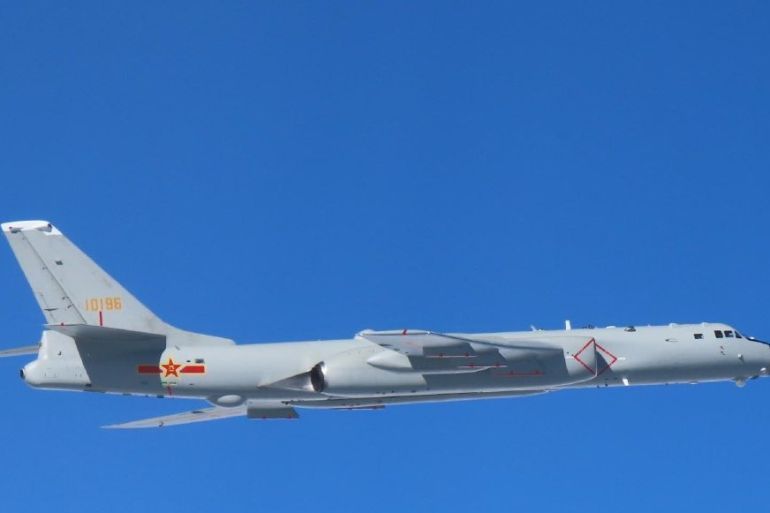
Nine military aircraft—seven Russian and two Chinese—were detected entering South Korea’s KADIZ around 10 a.m. on December 9. The planes, which included strategic bombers such as Russian Tu-95 Bears and Chinese H-6s, remained in the zone for roughly one hour before exiting without breaching South Korea’s territorial airspace. South Korea’s Joint Chiefs of Staff responded by scrambling fighter jets to monitor and escort the foreign aircraft as a precaution. The incursion was part of the 10th annual China-Russia joint strategic air patrol over the East China Sea and western Pacific.
Broader Regional Context
Since 2019, China and Russia have conducted one to two such unannounced joint patrols annually into South Korea’s KADIZ, a zone that extends beyond territorial airspace but requires identification for security reasons. These patrols have become routine yet remain a source of diplomatic friction and military alertness in the region. Recent precedents include a similar 11-aircraft patrol on November 29, 2024, and a March 2025 incident where Russian jets approached within 12.5 miles of South Korean airspace, near the Dokdo/Takeshima islets—territorial disputes between South Korea and Japan further complicate the security environment.
Regional Alliances and Reactions
Japan also scrambled fighter jets during this latest patrol near Okinawa, underscoring heightened tensions connected to Taiwan support and longstanding territorial disputes. South Korea’s formal protest to China and Russia highlights Seoul’s determination to assert sovereignty and respond firmly to perceived provocations without escalating to direct confrontation. The responses from both Seoul and Tokyo reflect deepening security cooperation with the United States amid concerns over expanding China-Russia military influence in the Indo-Pacific.
Strategic and Security Implications
The flights serve multiple strategic purposes, including showcasing China and Russia’s strengthening military alliance and challenging the established norms of air defense identification and control in the region. By operating within the KADIZ but carefully avoiding sovereign airspace, these joint patrols test the readiness and rules of engagement of South Korea’s air defense while seeking to avoid full military escalation. These activities also signal to regional and global actors that China and Russia intend to maintain a coordinated presence and influence over contested maritime and air domains.
Looking Ahead
As China and Russia continue such joint exercises, regional security dynamics will require constant vigilance and calibrated diplomatic and military responses from South Korea, Japan, and their allies. The ongoing patrols underscore the complexities business leaders, policymakers, and academics must consider regarding geopolitical risk, continuity of regional trade routes, and the stability of the Indo-Pacific security architecture. Ensuring transparent communication and measured defense readiness will remain integral to managing these evolving security challenges.