

London, December 08, 2025
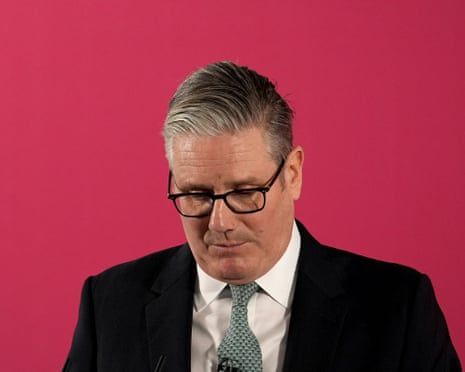
Prime Minister Keir Starmer is increasingly compelled to align closely with his Chancellor of the Exchequer amid the UK’s fragile economic backdrop and tight fiscal constraints, a strategic move aimed at preserving government credibility and political stability in 2025.
Political and Economic Context
Following Labour’s decisive victory in July 2024, ending 14 years of Conservative rule, Starmer’s government inherited a challenging economic environment marked by sluggish growth, high public debt, and significant public sector backlogs, particularly in healthcare and infrastructure. The administration has committed to fiscal discipline, ruling out increases in income tax, VAT, or National Insurance, which imposes a narrow fiscal space for investment and spending. These conditions set the stage for a cautious economic management approach.
Starmer’s Reliance on His Chancellor
Starmer’s reputation for economic competence is heavily dependent on his Chancellor, who serves as the government’s principal economic strategist and spokesperson. Unlike Starmer, whose background lies in law and human rights, the Chancellor is entrusted with shepherding key policies including green investments, infrastructure projects, and public sector reforms within a stringent fiscal framework. This partnership is crucial not only for policy delivery but also for maintaining unity within the Labour Party, which spans a wide spectrum of economic views and is sensitive to fiscal decisions involving spending cuts or borrowing limits. Maintaining a coherent front reassures both markets and the public, which remain vigilant following the economic turbulence under previous Conservative administrations.
Comparisons with Rishi Sunak
The political dynamic between Starmer and his Chancellor echoes the technocratic approach once embodied by Rishi Sunak, who, despite his fiscal expertise as Chancellor and Prime Minister, struggled to project a compelling political narrative. Observers caution that Starmer risks a similar fate—seen as competent yet uninspiring—if his administration cannot sufficiently distinguish its economic vision beyond metrics. Starmer’s concept of a “decade of national renewal” hinges on the Chancellor’s ability to effectively implement growth-oriented policies, underscoring the interdependence of their roles.
International and EU Dimensions
On the international stage, Starmer’s government has prioritized resetting relations with the European Union, focusing initially on security and defence cooperation. However, advancing deeper economic ties, such as in trade and regulatory alignment, rests significantly on the Treasury’s engagement and the Chancellor’s stance towards Brussels. Globally, the UK faces uncertainties stemming from US trade policies, China’s economic outlook, and fluctuating energy markets. To navigate these complexities, internal coherence between Number 10 and the Treasury is essential, particularly concerning foreign investment and financing the green transition.
Risks and Necessity of Their Alliance
The close alliance between Starmer and his Chancellor is a strategic necessity driven by the economy’s centrality to the government’s vulnerability and the imperative to uphold fiscal credibility. The Treasury’s leadership is indispensable in delivering Labour’s reform agenda and sustaining party unity. Nevertheless, this relationship involves inherent risks: should the Chancellor’s approach appear overly cautious or technocratic, Starmer may be criticized for lacking political vision; alternatively, more radical fiscal policies might provoke internal dissent. Ultimately, Starmer’s tenure as Prime Minister is now inextricably linked with his Chancellor’s success, making their collaboration a pivotal factor in British politics today.