

New York, December 02, 2025
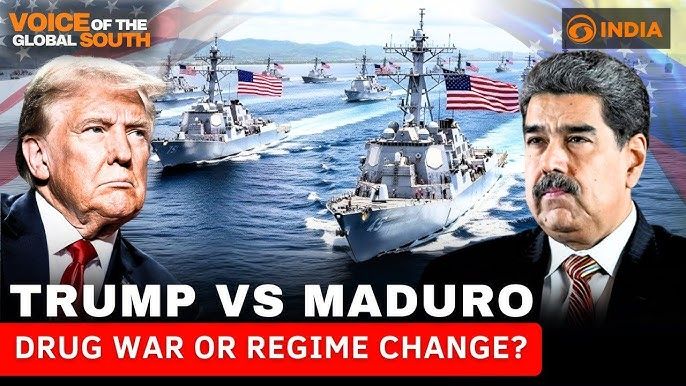
The United States has formally closed Venezuelan airspace and delivered a private ultimatum to President Nicolás Maduro, warning that military intervention is a possibility unless Maduro steps down. This move marks a significant escalation in U.S.-Venezuela tensions amid efforts to restore American influence in the region.
Trump’s Ultimatum and Airspace Closure
President Donald Trump declared Venezuela’s entire airspace closed to all flights under the U.S. directive. Alongside this, a private ultimatum has been issued to Venezuelan President Nicolás Maduro, signaling that military force could be used if he refuses to relinquish power. This announcement underscores a toughened U.S. stance aimed at pressuring Maduro’s regime.
Strategic Objectives Behind the Action
The Trump administration’s aggressive posture is motivated by a desire to reassert U.S. dominance in the Western Hemisphere. By challenging Maduro’s authority, the U.S. seeks to dismantle what it views as an illegitimate regime. Furthermore, the move serves as a deterrent message to other authoritarian governments in the Americas, reinforcing that U.S. intervention remains a decisive option to uphold democratic governance.
Supporting Venezuela’s opposition forces is another strategic dimension. The administration intends to amplify pressure on Maduro through a combination of threats and backing for those seeking political change within Venezuela.
Global Implications of the Confrontation
The confrontation has far-reaching consequences beyond bilateral relations. Venezuela’s role as a significant oil producer means that any conflict could disrupt global oil supply chains, exacerbating already fragile economic conditions worldwide. Instability in Venezuela threatens to inject further volatility into international markets and geopolitical balances.
Maduro’s Limited Options Amid U.S. Pressure
Facing the ultimatum, Maduro’s choices are sharply constrained. He must either comply with U.S. demands to step down or defy the threat relying on support from international allies opposed to American intervention. The outcome will influence the hemisphere’s political trajectory, with analysts warning of a precarious crossroads defined by either potential military action or strategic diplomatic coercion.
This standoff places the Western Hemisphere at a critical juncture, where the decisions of Maduro and the U.S. will shape regional stability and international economic conditions in the months ahead.