

London, November 30, 2025
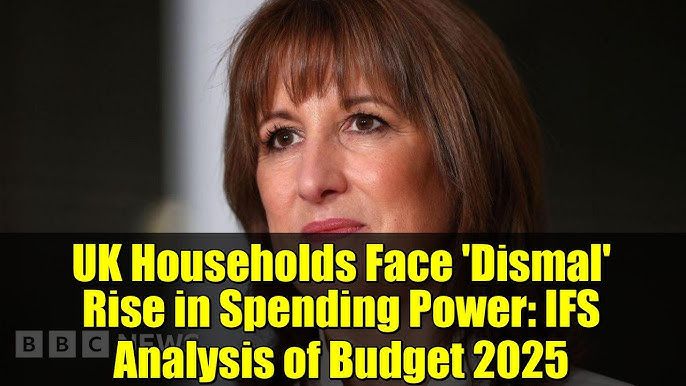
The Institute for Fiscal Studies (IFS) has issued a grim forecast for UK household spending power, projecting real disposable income growth of just 0.4% annually over the current parliament due to low productivity and tax hikes introduced in the 2025 Budget.
Slow Income Growth Amid Economic Pressures
The IFS report highlights that household spending power is set to stagnate, with modest growth failing to keep pace with historical standards. This sluggish increase stems primarily from persistently low productivity growth paired with fiscal tightening through tax increases implemented as part of measures to stabilize public finances.
Limited Relief from Government Interventions
While the government has introduced initiatives aimed at easing immediate financial strain—such as winding down the Energy Company Obligation and extending the Warm Home Discount—these are expected to provide only short-term alleviation rather than a sustained boost to household incomes.
Long-Term Impact of Tax Increases
Importantly, the IFS warns that larger tax burdens are forthcoming, with significant increases scheduled to come into force around 2030–31. These future rises could substantially reduce disposable income over the longer term, exacerbating pressures on family budgets.
Inflation Undermines Real Gains
The Office for Budget Responsibility (OBR) underpins these findings with forecasts showing only a 2.9% cumulative real growth in household disposable income per capita for the parliamentary term. However, this modest growth is undermined by ongoing elevated inflation rates, which have already eroded living standards and are set to continue challenging household finances.
2025 Budget: Balancing Fiscal Responsibility and Household Support
The 2025 Budget exemplifies the government’s attempt to navigate competing priorities—implementing cost-cutting measures to stabilize the economy while injecting targeted support to help households cope with high inflation and energy costs. Yet, according to the IFS, these policies will likely leave many families with negligible increases in spending power moving forward.
The IFS outlook paints a sobering picture for policymakers and economic planners. With slow growth and fiscal tightening converging, households face a future where elevated cost pressures persist, highlighting the urgent need for strategies that reconcile economic stabilization with meaningful income support.