

New York, December 06, 2025
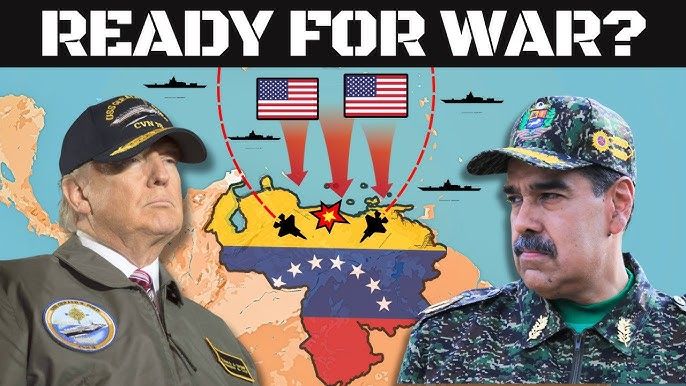
The United States is conducting significant military preparations near Venezuela, including naval deployments and simulated airstrike rehearsals, amid heightened tensions and President Trump’s increasingly hawkish statements, raising concerns over potential limited military action in the Caribbean region.
U.S. Military Buildup in the Caribbean
In recent weeks, the U.S. has escalated its naval and air presence around Venezuela. This includes deploying the USS Gerald R. Ford aircraft carrier strike group and intensifying flight operations from Puerto Rican bases. U.S. naval forces have also increased their proximity to Venezuelan waters under the official mantle of anti-drug missions. These movements mark the largest surge of military assets in the area in recent years.
Simulated Airstrike Missions and Political Signals
Reports from The Wall Street Journal and other news outlets reveal the Pentagon has been conducting simulated airstrike operations targeting Venezuela. These exercises, designed to rehearse rapid-response scenarios, suggest the military is preparing contingency plans for potential strikes. President Donald Trump’s rhetoric has grown progressively assertive; his recent remarks have indicated a willingness to consider land-based operations, declaring Venezuelan airspace “closed” and warning that ground interventions “will start very soon.”
Official U.S. Position
Despite these developments, the U.S. administration maintains its military actions are focused primarily on combating drug trafficking and preserving regional stability. Officials emphasize support for diplomatic and economic pressure aimed at the Nicolás Maduro government while denying any plans for an outright invasion or declaration of war. These assertions frame the military buildup as a deterrent and a tool of coercive diplomacy.
Assessments from Experts and Analysts
Current and former U.S. officials, as well as regional experts, argue that the force posture currently observed is insufficient for mounting a full-scale ground invasion. While they acknowledge a serious preparation for limited airstrikes or targeted strikes against drug networks, they consider a large-scale war unlikely at this point. This distinction underscores the U.S. strategy as focused on precise, limited military options rather than all-out conflict.
Venezuela’s Response
In response to these U.S. military movements and rhetoric, Venezuelan President Nicolás Maduro has mobilized over four million members of the Bolivarian Militia, declaring the country at “maximum preparedness” for a potential U.S. attack. Maduro has condemned the United States for what he describes as an “imperialist aggression,” accusing Washington of violating Venezuela’s sovereignty and preparing illicit military actions.
Regional Coordination and Legal Context
The United States has stepped up coordination with regional partners including Colombia, Brazil, and Caribbean nations. While these allies have offered intelligence and logistical support, none have committed to direct military engagement. Legally, the U.S. formalizes its stance by continuing to categorize Maduro as a narco-terrorist, with federal indictments on narcoterrorism charges, providing a justification framework for targeted strikes under counter-narcotics operations.
Potential for Escalation
The combination of the U.S. military buildup, ongoing rehearsals for airstrikes, and President Trump’s aggressive language has heightened tensions across the region. Venezuela’s state of heightened readiness and mobilization increases the risk of misunderstandings or incidents that could rapidly escalate into open conflict. While preparations do not currently indicate imminent war, the fluid situation demands close monitoring given the volatility and the high stakes involved.