

Berlin, December 09, 2025
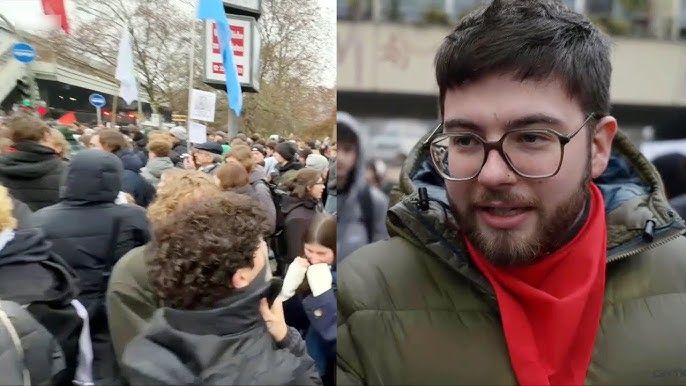
Tens of thousands of young Germans nationwide protested on December 5 against the government’s newly enacted compulsory military registration law, which mandates all 18-year-old men born in 2008 or later to complete a questionnaire and undergo a medical exam starting January 2026. The demonstrations oppose what youths view as forced militarization amid rising geopolitical tensions.
Massive Youth Protests Across Germany
On the day of the nationwide strike, more than 90 German cities, including Berlin, Munich, Hamburg, Dresden, and Stuttgart, saw tens of thousands of students walk out of school and march in protest. The demonstrators voiced strong opposition to the compulsory military registration policy and the broader trajectory toward militarism. Many chanted slogans decrying the government’s initiative as a “recruitment of death” and expressed fears about coerced conscription spiraling into involuntary service and potential war involvement.
Details of the Conscription Policy
The German Bundestag’s recently passed “Military Service Modernisation Act” requires all males turning 18 from 2026 onwards to register with the military via a mandatory questionnaire and a medical examination starting in January. While direct military service remains voluntary at present, compulsory conscription could be imposed if volunteer numbers do not meet the Bundeswehr’s expanded target force size. The German armed forces currently number around 184,000 active soldiers but aim to reach 260,000 amid heightened security concerns.
Youth Opposition Rooted in Angst and Principle
Protesters argue the new policy amounts to forced involvement in military escalation they reject. Many young Germans view the compulsory registration as coercive and an outdated relic thrust back into law without public consensus. Central to their concerns is a fear of being compelled into war preparations, specifically regarding Russia’s aggression in Eastern Europe, which the government cites as justification for military expansion. Critics say the government is sacrificing the futures of young people for political posturing and renewed German militarism.
Political and Social Divides Emerge
Support for the reforms largely comes from the governing SPD and CDU/CSU parties. However, youth organizations affiliated with these parties have sought to reframe the protests as opposition solely against forced service rather than broader anti-militarism. Meanwhile, left-leaning groups like International Youth and Students for Social Equality warn the new conscription marks a dangerous escalation toward aggressive militarization and potentially conflict. The protests highlight generational tension and contentious debate over Germany’s defense and social policies.
Historical and Geopolitical Context
Germany suspended compulsory military service in 2011 after more than five decades, reflecting long-standing post-World War II pacifist sensibilities and strategic calculations. The reintroduction of compulsory military registration is a direct response to shifting security dynamics in Europe, particularly Russia’s invasion of Ukraine and the resulting NATO adjustments. The German government’s move signals a significant policy turnaround with deep implications for the nation’s military posture and societal cohesion.
The unfolding situation will be closely monitored by policymakers and global observers, as Germany’s decisions influence NATO strategies and the broader geopolitical balance in a region marked by escalating tensions. The youth protests signal societal resistance that may shape the nation’s military and political direction in the coming years.