

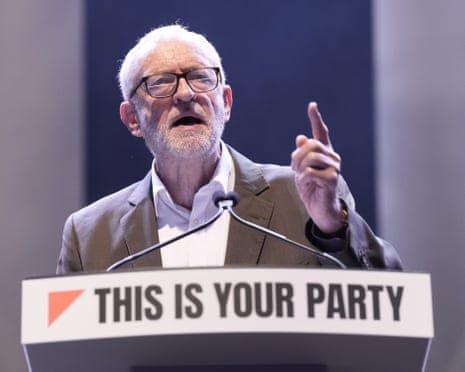
Liverpool, December 01, 2025
Your Party’s inaugural conference in Liverpool over the weekend has exposed significant internal divisions and organizational challenges, casting doubt on its ability to establish a unified and effective political force. Key decisions on leadership and ideology were narrowly passed amid factional disputes and public boycotts.
Foundational Decisions and Leadership Voting
The conference ratified several foundational measures for the newly formed Your Party, founded just months earlier in July 2025. Delegates ratified the party name “Your Party” and approved a model of collective leadership, narrowly passing by 51.6% to 48.4%. Under this structure, an 11-member executive committee will lead, including designated roles such as chair, deputy chair, and spokesperson. Notably, parliamentary members are barred from serving as top executives, a change that sparked significant debate. This collective leadership model was advocated by co-founder Zarah Sultana as a means to enhance member democracy, though it faced opposition from Corbyn, who preferred a sole leader approach.
The conference also confirmed a policy allowing dual membership with other political parties, reflecting an effort to broaden potential alliances.
Internal Factionalism and Boycott
The event’s proceedings were marred by ongoing internal conflicts and procedural chaos. Notably, co-founder Zarah Sultana boycotted the conference’s first day, protesting what she termed a “witch hunt” targeting members of certain left-wing factions. The dispute underscores persistent factionalism and infighting that have dogged the party since its foundation, hampering efforts to present a cohesive platform.
Ideological Commitments
Despite these challenges, the conference decisively positioned Your Party as explicitly socialist and working-class focused. Over 77% of delegates supported emphasizing a working-class identity, while more than 80% voted to formally define the party as socialist. These results affirm the party’s commitment to a far-left ideological stance, aiming to appeal to disaffected Labour voters and those seeking an alternative left option.
Media Characterization and Public Perception
Press coverage of the conference emphasized the chaotic scenes and internal discord, labeling the event a “Pythonesque shambles.” Analysts have raised concerns about the party’s capacity to capitalize on its initial momentum amidst such visible factionalism. Questions linger over whether Your Party can overcome its organizational turbulence to mount a credible challenge to established political options like Labour or the Greens.
Outlook and Implications
While the conference established a formal organizational framework and ideological clarity, the evident divisions and leadership disagreements raise substantial hurdles. The party’s future effectiveness as a unified political entity remains uncertain as it seeks to build its profile and influence in a competitive political landscape. Observers and stakeholders will be watching closely to see if Your Party can resolve internal conflicts and translate its commitments into tangible political progress.